
Restorative dentistry
Anaesthesia in dentistry: treatment without pain
Dental anaesthesia makes treatment comfortable and pain-free. It helps the dentist control pain, reduces patient anxiety and keeps treatment safe and comfortable.
01 / 04
Anaesthesia
What dental anaesthesia involves
Anaesthesia means giving medication that temporarily blocks nerve signals in the area being treated. You feel no pain during the procedure — whether it is a filling or complex surgery.
Choosing the right anaesthesia for each person is essential for it to work well and safely: the dentist takes into account your general health, medical history and sensitivity.
- blocks pain only in the treatment area
- suitable for restorative work, endodontics and surgery
- the drug is chosen individually
- reduces anxiety before treatment
Before the anaesthetic, the dentist will ask about allergies, any medication you take and past illnesses.
Used for: most dental procedures

02 / 04
Anaesthesia
Types of anaesthesia: local, sedation, general
The type of anaesthesia depends on the procedure and your needs. Body weight, current medication, other conditions and past reactions to anaesthetics are all taken into account.
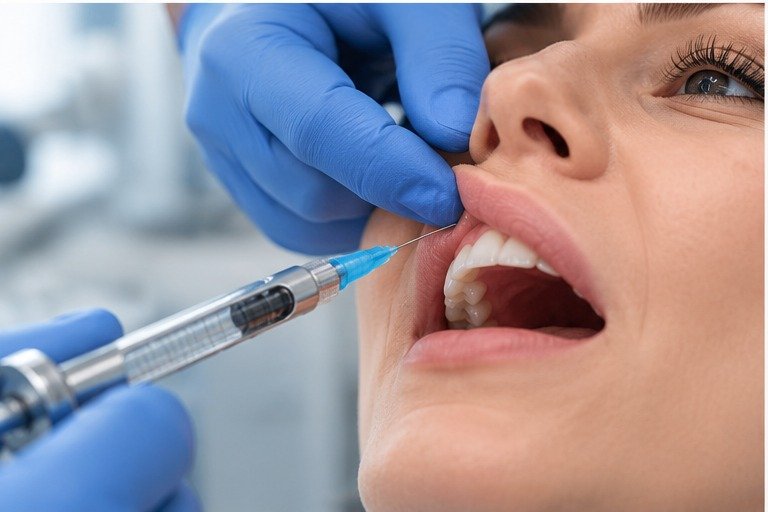
Local anaesthesia is the most common method: a specific area of the mouth is numbed with a spray or gel (topical) or by an injection into the tissue (infiltration). You stay fully conscious.
Conscious sedation suits anxious patients and anyone afraid of the dentist: the medication brings on a state of calm without putting you to sleep. General anaesthesia is reserved for special cases — complex maxillofacial surgery, treatment of patients with special needs or severe dental phobia — and is given only by an anaesthetist, with continuous monitoring of vital signs.
- local — spray, gel or injection
- oral sedation — a tablet before treatment
- inhalation sedation — nitrous oxide through a mask
- intravenous sedation — precise control of the sedation level
- general anaesthesia — only when clinically indicated
The dentist chooses the type of anaesthesia together with you after the examination.
Choice: individual, as clinically indicated
03 / 04
Anaesthesia
Preparation and how long anaesthesia lasts
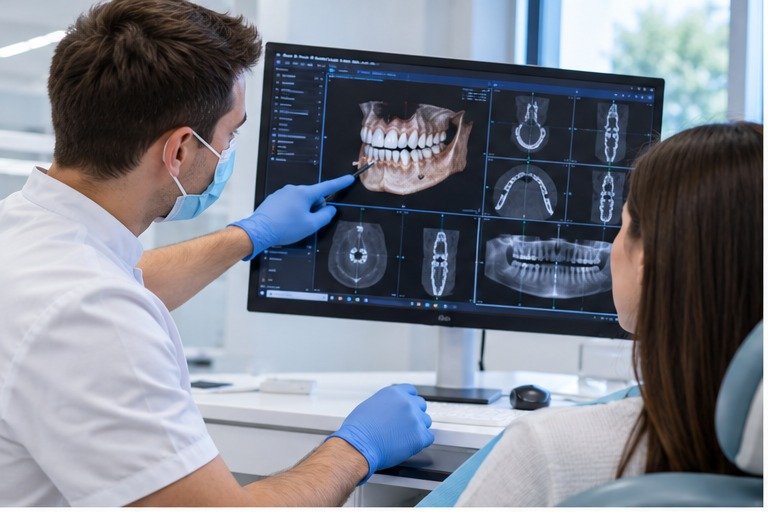
Although anaesthesia is routine, discuss any allergies, medication and your medical history with the dentist before your appointment. Avoid caffeine, eat normally beforehand (unless told otherwise) and follow your dentist's advice.
How long it lasts depends on the drug and your metabolism. Topical anaesthesia lasts about 30 minutes, an injection up to several hours. The body starts clearing the anaesthetic after roughly 1.5–2 hours (for lidocaine, for example), but some numbness may linger for longer.
- tell the dentist about allergies and medication
- avoid caffeine before your visit
- eat beforehand unless the dentist says otherwise
- topical anaesthesia — about 30 minutes
- injection — up to several hours
Choosing the right anaesthetic for you directly affects how long and how well it works.
Duration: from 30 minutes to several hours
04 / 04
Anaesthesia
Aftercare and possible reactions after anaesthesia
Some patients may have lingering numbness, sensitivity, mild pain or a small bruise at the injection site. These are normal reactions that usually settle on their own.
Complications are rare: an allergic reaction, prolonged pain, swelling or bleeding. Talking openly with your dentist and choosing the right anaesthesia for you greatly reduce the risk.
- don't eat until the numbness wears off, so you don't bite your cheek or tongue
- don't smoke for at least 24 hours
- contact the clinic if pain or swelling persists
If the numbness lasts longer than usual, call your dentist.
Recovery: usually within a few hours

Treatment plan
A clear path from diagnosis to result
What the treatment involves and the order of the stages are decided after the examination. The dentist explains the options, timing and cost before any work begins.
Clinical assessment
Tests as clinically indicated
Stages and cost
An agreed sequence
Patient glossary
Terms
- Anaesthesia
- A procedure in which the dentist gives medication for temporary pain relief to prevent pain during dental procedures.
- Local anaesthesia
- The anaesthetic works only in a specific area (for example a tooth or the gum) without affecting the rest of the body.
- Anaesthetic drugs
- Medicines that block the sensation of pain. In dentistry these are usually injections or numbing gels.
- Local effect
- The anaesthesia works only where it is given, for example around the tooth, and does not affect sensation in the rest of the body.
- Anaesthetist
- A specialist who manages anaesthesia in complex cases or under general anaesthesia, monitors the patient and adjusts the dose.
Frequently asked questions
FAQ
Does the anaesthetic injection hurt?
Before the injection the gum is usually numbed with a gel or spray, so you will barely feel it. After that, treatment is pain-free.
How long does the numbness last after dental treatment?
Topical anaesthesia lasts about 30 minutes, an injection up to several hours. The exact time depends on the drug and your metabolism.
Can I have treatment under sedation if I'm very scared?
Yes. Anxious patients can have conscious sedation — orally, by inhalation or intravenously. The dentist will decide at your consultation whether it is suitable.
When can I eat after anaesthesia?
Once the numbness has worn off completely, so you don't accidentally bite your cheek or tongue. Avoid smoking for at least 24 hours.
Can I find out the cost in advance?
Yes. After the examination the dentist draws up a treatment plan and tells you the cost of each stage before any work begins.
How do I book a consultation?
Call +373 22 50 80 80 or message us on WhatsApp. The clinic is open Mon–Fri 09:00–18:00, Sat 09:00–12:00.