Diagnostics
Intraoral 3D scanning: a digital impression without discomfort
Digital 3D scanning of the mouth is a modern alternative to traditional impressions. A latest-generation scanner creates an accurate 3D model of your teeth and gums in a few minutes — fast, precise and completely non-invasive.
01 / 03
Intraoral scanning
3D intraoral scanning: what it is and how it works
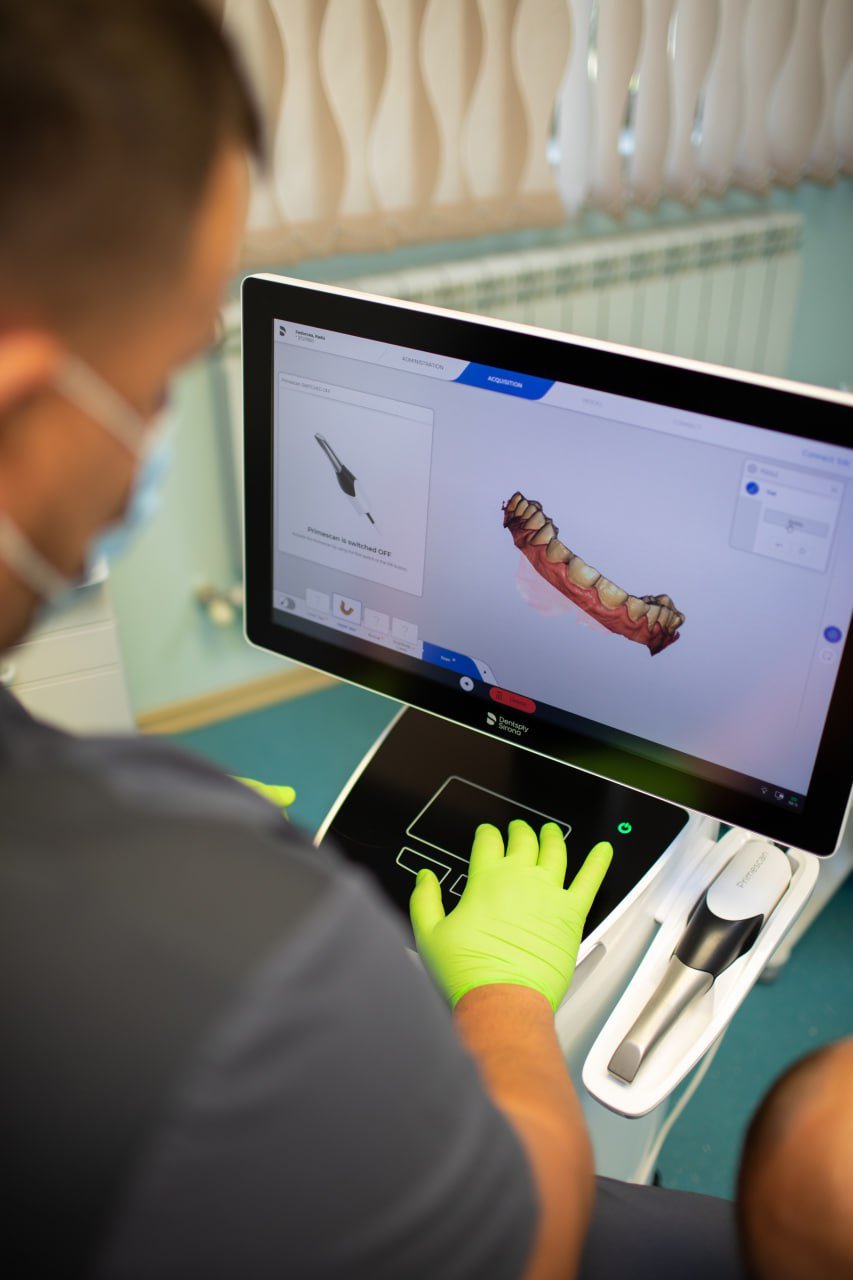
Instead of impression paste, a digital scanner captures detailed images of the mouth. The process is quick, accurate and free from the unpleasant sensations of older methods.
The dentist gets an accurate 3D image of your teeth and gums. This helps with a wide range of procedures, making treatment faster, safer and more comfortable.
- making crowns, bridges and dentures
- orthodontic appliances and aligners
- planning surgery
- veneers and aesthetic restorations
Scanning is a contact-free digital alternative to traditional impressions.
Duration: a few minutes
02 / 03
Intraoral scanning
Benefits for the patient: comfort, time, precision
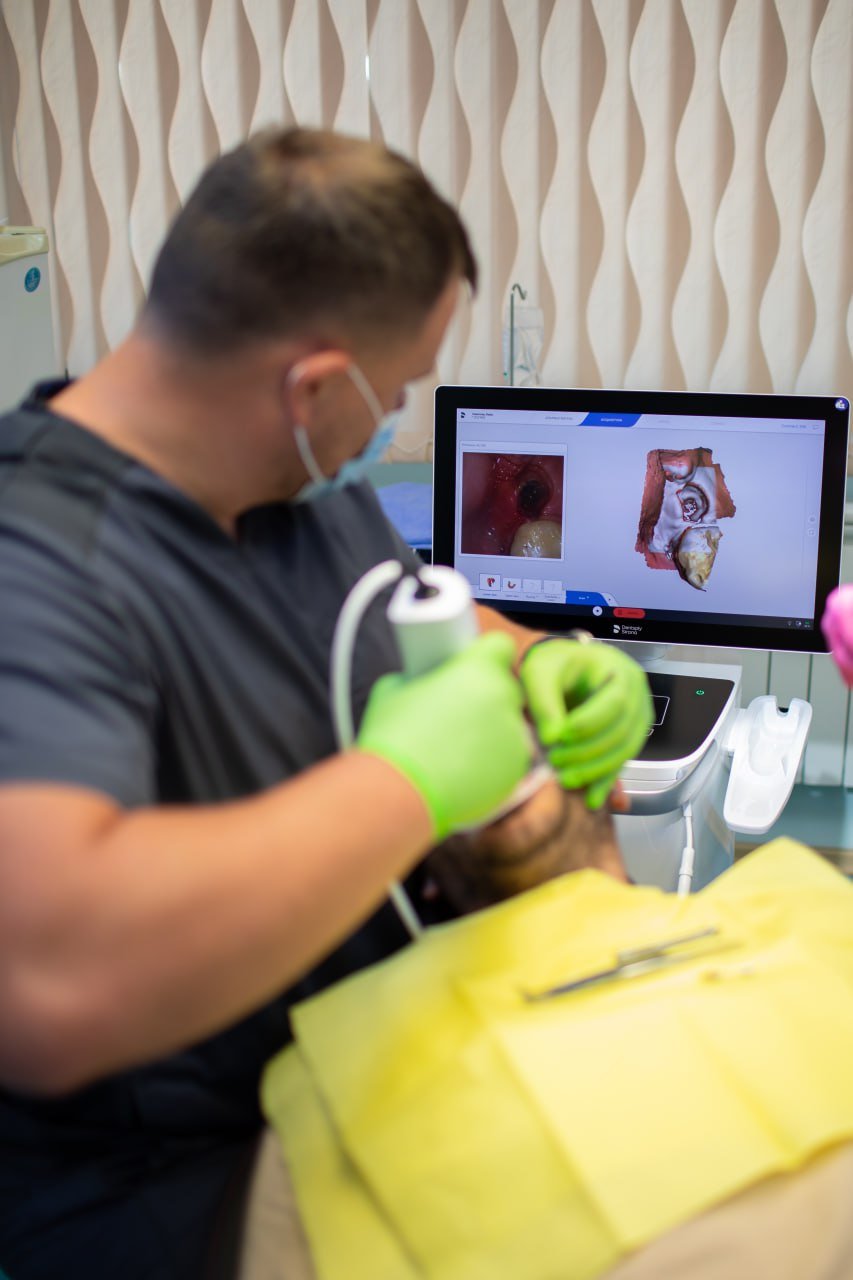
Comfort. The scanner does away with impression materials, which can be unpleasant and trigger gagging. Every detail is captured without invasive contact with the tissues.
Saves time. A traditional impression takes up to 20–30 minutes; a digital scan takes just a few. Precision. The 3D image shows tooth anatomy in detail, so treatment can be planned as precisely as possible, with fewer risks.
- no impression paste and no gagging
- a few minutes instead of 20–30
- a detailed 3D model of teeth and gums
- precise treatment planning
The more accurate the model, the better crowns, veneers and aligners fit.
Instead of an impression: a digital file
03 / 03
Intraoral scanning
Communication between specialists, fewer errors, treatment monitoring
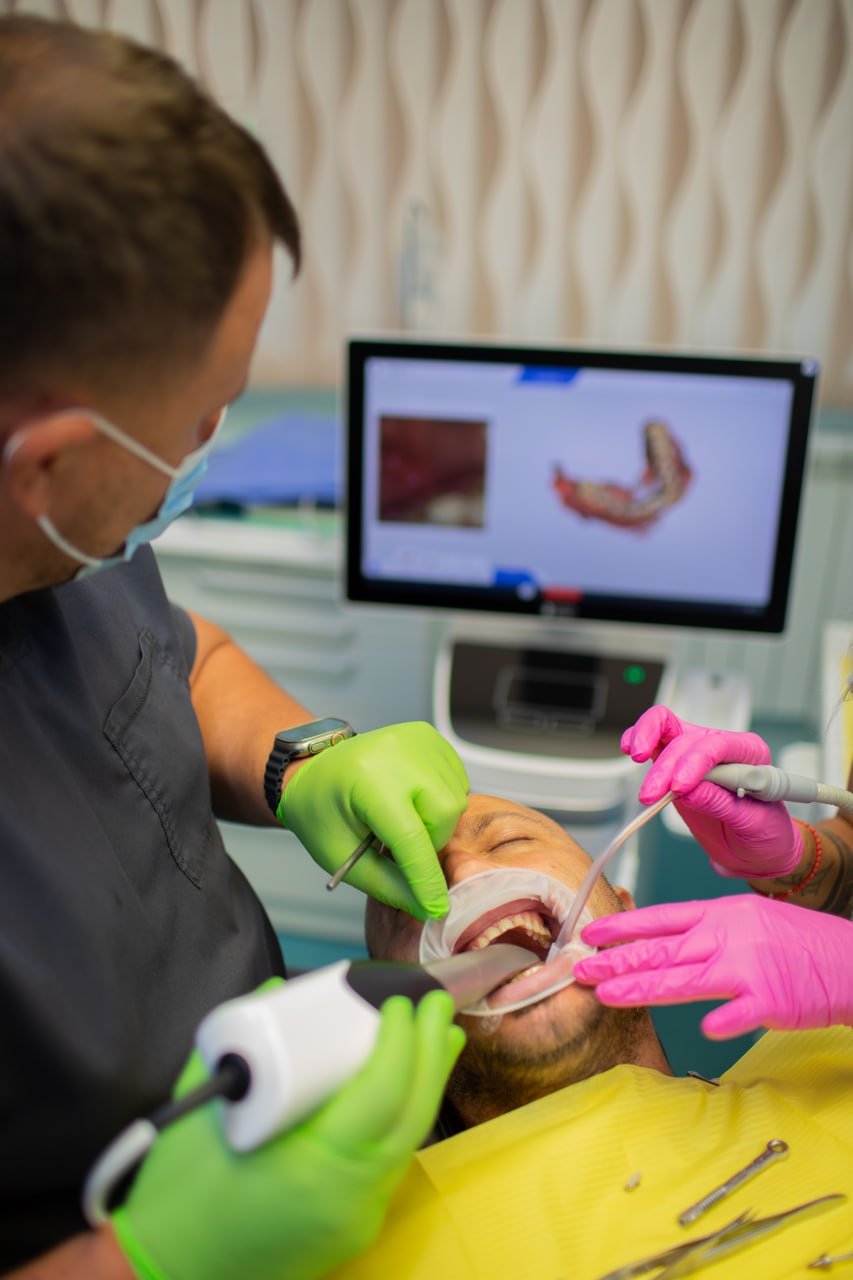
Communication between specialists. Digital files are easily shared between dentists and the laboratory wherever they are — important in complex cases involving a surgeon, an orthodontist and a prosthodontist.
Fewer errors. A digital scan cannot distort or be damaged in transit, and it cannot be lost. Treatment monitoring. Scans from different stages can be compared, which is especially valuable in orthodontics. A digital impression is also the basis for digital planning.
- instant file transfer to the dentist and laboratory
- no distorted or lost impressions
- scans compared at different stages
- precise adjustments in orthodontics
At UniDentArt, digital scanning is part of next-generation treatment: comfort and precision.
Used in: prosthodontics, orthodontics, surgery
Treatment plan
A clear path from diagnosis to result
What the treatment involves and the order of the stages are decided after the examination. The dentist explains the options, timing and cost before any work begins.
Clinical assessment
Tests as clinically indicated
Stages and cost
An agreed sequence
Patient glossary
Terms
- Intraoral scanner
- A special device the dentist uses to create a 3D image of teeth and gums without taking impressions.
- Digital impression
- An accurate 3D image of the teeth captured by the scanner, instead of the usual paste impression.
- 3D model of the teeth
- A computer image of your teeth created after scanning. It is used to make crowns, aligners, veneers and other restorations.
- Digital dentistry
- A modern approach to treatment using scanners, 3D models and computer technology.
- Precision
- Scanning captures the finest details of the tooth surface, ensuring high precision when making dentures or crowns.
Frequently asked questions
FAQ
How is intraoral scanning better than a conventional impression?
It is more comfortable (no paste and no gagging), faster (a few minutes instead of 20–30), more accurate, and the digital file cannot distort or get lost.
How long does scanning take?
Usually just a few minutes for both arches.
Is it safe?
Yes. Scanning is non-invasive: the scanner doesn't harm the tissues and uses no X-rays.
What is a digital scan used for?
For making crowns, bridges, veneers and dentures, orthodontic appliances and aligners, and for planning surgery.
Can I find out the cost in advance?
Yes. After the examination the dentist draws up a treatment plan and tells you the cost of each stage before any work begins.
How do I book a consultation?
Call +373 22 50 80 80 or message us on WhatsApp. The clinic is open Mon–Fri 09:00–18:00, Sat 09:00–12:00.