
News · Interview
Dorin Istrati: Talking to fellow dental professionals drives you forward
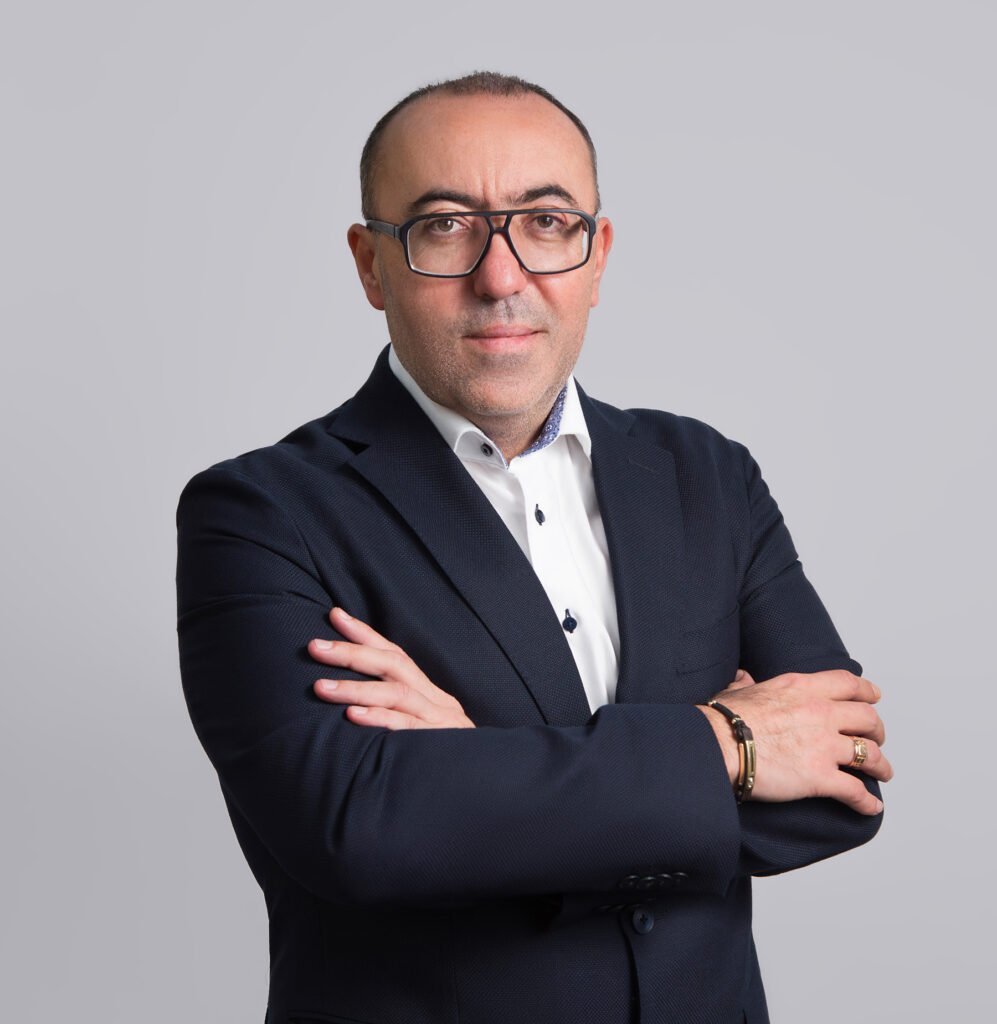
From 7 to 11 October 2015, the Irish capital hosted the 60th annual congress of the European section of the International College of Dentists (ICD). Dorin Istrati, MD and head doctor of the UniDentArt dental centre, told us about taking part in this prestigious organisation's meeting.
Sanatate: Dorin, tell us about the congress where you represented our country.
Dorin Istrati: The congress was organised by the International College of Dentists (ICD) — one of the most prestigious organisations in the world, with regional sections all over the globe. Within the European section, Moldova belongs to the Central and Southern Europe section. This year, specialists from 45 European countries took part in the Dublin meeting.
Sanatate: What are the ICD's main areas of activity?
D. I.: The organisation supports doctors' professional achievements and helps advance scientific knowledge in dentistry. Papers approved by the College cover innovative techniques and treatment plans across different branches of dentistry — surgery, prosthodontics, orthodontics and so on. The ICD is also very active in charity work and opens dental clinics staffed by volunteers in developing countries.
Sanatate: How does one become a member of this prestigious body?
D. I.: Only doctors with an academic degree who are nominated by professors from another country can become members. The admission process works like this: the candidacy is examined, studied thoroughly from every angle and approved by the ICD board. The candidate becomes a fellow member after being formally inducted into the College at a gala ceremony. Once admitted, a specialist is automatically invited to the congresses of every regional section. Six years ago two candidates from Moldova were admitted to the European section of the ICD — my colleague Diana Uncuța and myself.
The board of the ICD European section is now working to involve more colleagues from Eastern European countries. Unfortunately, as section president Tom Feeney noted, several serious obstacles, including financial ones, are still standing in the way. This applies especially to dentists working in public institutions. However, board members are developing ways to overcome these difficulties.
Sanatate: What were the key topics at the congress? Were there any papers on restorative dentistry?
D. I.: The conference slogan, “Learning without borders”, reflects the wide range of topics presented. Most of the papers were devoted to maxillofacial surgery. Cancers of the maxillofacial region were also a priority topic. New methods of treating malignant tumours and reconstructive surgery after their removal were discussed too.
This year there were only a few papers in restorative dentistry, my own speciality. One was given by Dr Hal Duncan, the Irish representative of the European Society of Endodontology (ESE). His talk, Vital Pulp Treatment: Novel Solutions To Old Problems, covered research into pulp regeneration and the possible use of stem cells to stimulate it. I was particularly pleased by this topic, because back in 2013 I had studied it in my doctoral thesis and was the first to demonstrate root pulp regeneration clinically.
Sanatate: Did you give a talk this year?
D. I.: At this congress I attended as a delegate. Perhaps as early as 2017 I will present a paper on the method I developed for treating root canals in children's teeth with immature roots affected by a bone-destroying disease process, as in chronic periodontitis.
Sanatate: Did the congress programme include cultural events and a chance to see Ireland?
D. I.: There was very little free time during the event. The organisers put together a full cultural and sightseeing programme. As Dublin is one of Europe's oldest cities, with many historic sites, delegates had the chance to learn about the country's history. On the first day we were invited to an Irish cultural evening at the distillery of the famous local Jameson whiskey. The visit to the distillery's whiskey museum was memorable, and the trip to Belfast that closed the forum was impressive too. Overall, the trip was both productive and enjoyable.
Sanatate: In Moldova and abroad alike, there is a lot of focus on innovation but little talk about dentists' own achievements and level of professionalism. Why is that?
D. I.: It's hard to say. There is indeed a lot of talk about innovation, but in my view few doctors apply new technologies one hundred per cent — and that is exactly where the key moments of treatment lie. If a technology exists, it has to be adopted and followed precisely. To get the best out of it, doctors have to pay attention to every detail.
Some doctors talk a great deal about their achievements, but I believe a doctor's professional level is judged by the patient — the highest jury there is. It is very important to choose the right treatment method and a rational approach, and to take the patient's state of mind into account regardless of their social standing. People are already afraid when they come to a clinic, so it matters that they leave the dentist's chair smiling. That is exactly what the doctors at my clinic aim for. Many people judge a dentist by the number of certificates and diplomas, but that is not what matters most. Being a dentist is a vocation and an art.
Membership of the International College of Dentists involves not only attending congresses, forums and conferences but also educational, research and teaching work.
Sanatate: Tell us about this side of your work.
D. I.: I try to share what I have learned at the Nicolae Testemițanu State University of Medicine and Pharmacy, where I teach dentists and residents in the Department of Restorative Dentistry for postgraduate education, and at lectures and masterclasses I'm invited to give in CIS countries and across Europe. Of course, attending scientific forums matters for professional growth, but it often happens that doctors go to various conferences, listen to talks and recommendations, and then can't, won't or don't dare to apply them. It can also happen that at a congress you pick up information bit by bit, and the details that stay with you inspire some know-how of your own. Talking to fellow professionals in dentistry plays a huge role — it drives you forward.
Worth knowing:
According to WHO statistics, oral cancer is more common in developing countries than in developed ones. Incidence among men ranges from 1 to 10 cases per 100,000 people. In South-Central Asia, oral cancer is one of the three most common cancers. In India, the incidence of oral cancer is 12.6 per 100,000 people. It is worth noting that a sharp rise in oral and pharyngeal cancer has been recorded in several countries and regions, such as Denmark, France, Germany, Scotland and Central and Eastern Europe, and to a lesser extent in Australia, Japan, New Zealand and the USA.
Read also
All news →
Mega White Blue Fusion whitening
Who doesn't want white teeth — and to be sure that whitening won't harm the enamel and will be as painless as possible?
Read →Aesthetic occlusal rehabilitation
Few people know that the bite affects more than just the teeth: a poor bite can affect your joints, posture, muscles and facial appearance.
Read →Treating root caries
When decay reaches the root of a tooth, patients face pain, inflammation and a high risk of losing the tooth. Here's how we save it.
Read →